The Sound of the Brain: How Scientists Turned Neural Activity Into Music — and Into a Life-Saving Tool
Your brain doesn’t just process sound — it makes one. Here’s how researchers are listening to it, from reconstructing a Pink Floyd song to catching silent seizures in the ICU.
📖 10 min read • 3 studies cited • 🗓 Updated September 2026
Turning brain waves into music sounds like science fiction, but it’s real: it’s easy to think of the brain as something that only receives sound — through your ears, processed somewhere deep inside. But over the last few years, neuroscientists have been working on the opposite idea: taking the electrical activity of the brain itself and turning it into something you can actually hear. Not a metaphor. Actual audio, generated from actual brainwaves. Some of it sounds like music. Some of it is already helping doctors catch seizures faster than a specialist reading a screen. Here’s what that research really shows.
⚡ Key Takeaways
- UC Berkeley researchers used electrodes placed directly on the brain’s surface, plus AI, to reconstruct a recognizable Pink Floyd song purely from the neural activity of people listening to it.
- A University of Connecticut team built an open-source tool that turns EEG brainwave recordings into audible music — including a “brain piano” made from the brain’s own response to piano notes.
- This isn’t just a novelty: a clinical system that converts EEG into sound cut the time to detect ICU seizures from 145 minutes down to 23 minutes in a published trial, changing treatment in 40% of cases.
- Listening to brain activity works because the human ear is remarkably good at picking out patterns and irregularities in sound — often faster than the eye can spot them on a screen full of squiggly lines.
- None of this reads your thoughts. It reflects broad patterns of electrical activity, rhythm, and timing — not specific words or images.
🎵 Wait — the Brain Actually Has a “Sound”?
Not literally — your brain isn’t humming inside your skull. But it does produce constant, measurable electrical activity, and that activity has patterns: rhythms, frequencies, bursts, and lulls, very similar in structure to sound waves. For decades, scientists have displayed this activity visually, as the jagged lines of an EEG (electroencephalogram) readout. What’s changed recently is that researchers started asking a different question: instead of looking at that electrical activity, what happens if we listen to it? The process is called sonification — converting data into sound — and applied to the brain, it’s opened up some genuinely surprising findings.
🎸 Reconstructing a Pink Floyd Song From Brain Activity Alone
The most striking demonstration came from UC Berkeley. Neuroscientist Robert Knight and postdoctoral researcher Ludovic Bellier, working with Albany Medical Center, recorded electrical activity directly from the surface of the brain (a technique called ECoG) in 29 patients undergoing epilepsy surgery, while those patients listened to music. Using that neural data, they trained an AI model to reconstruct the audio — and it produced a recognizable version of Pink Floyd’s “Another Brick in the Wall, Part 1,” built entirely from brain signals.
Published in PLOS Biology in August 2023, this was the first time a recognizable song had been reconstructed from brain recordings alone. Knight has pointed out that music carries “prosody and emotional content” — the same qualities that give speech its rhythm and feeling. That’s part of why this research matters beyond music: understanding how the brain encodes those qualities could eventually help build better communication tools for people with conditions like ALS or speech loss after a stroke, where the ability to physically speak is damaged but the underlying neural activity is often still there.
🎹 The “Brain Piano”: Turning EEG Into Original Music
At the University of Connecticut, researchers Erika Skoe and Parker Tichko took a related idea in a more creative direction. Their project, sometimes called the “Neural Symphony,” is an open-source tool that converts EEG brainwave recordings into audible, musical sound — including what they call a “brain piano,” built from the brain’s averaged electrical response to hearing individual piano notes played over and over.
One of the more interesting findings to come out of that work: people who are bilingual or musically trained tend to produce a “cleaner” neural signal — with less background noise — in response to sound, compared to monolingual non-musicians. The tool itself is publicly available, meaning anyone can download real brain recordings and compose original music from someone else’s neural activity — a genuine bridge between neuroscience and art, and a very literal example of a “brainsong.”
🏥 Where This Gets Serious: Catching Seizures by Sound
The most practical application of all isn’t in a lab making art — it’s already running in hospital ICUs. A system built by Ceribell converts a patient’s live EEG signal directly into sound, so a bedside nurse or doctor — without specialized EEG training — can listen for the distinct pattern that signals a seizure, instead of waiting for a neurologist to visually review a screen full of brainwave lines.
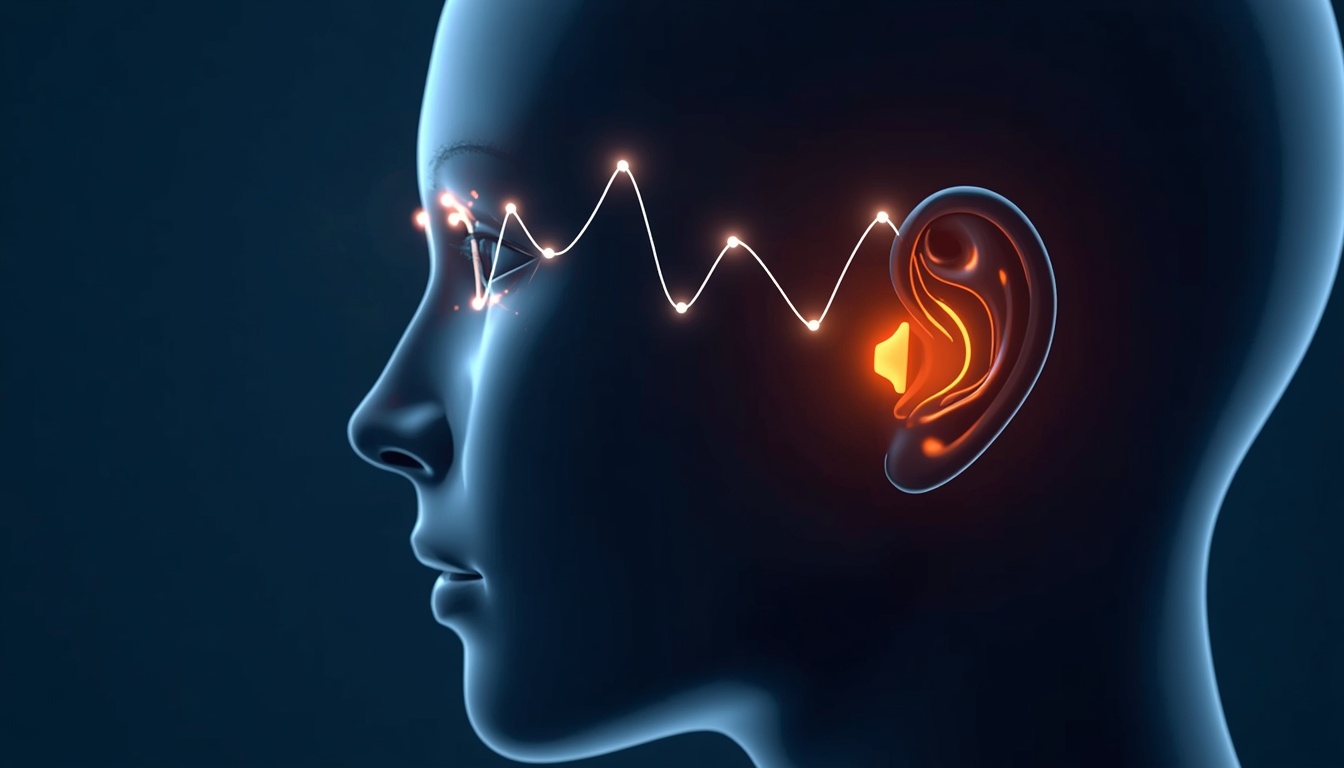
In a prospective clinical trial published in Neurocritical Care (2018), covering 35 ICU cases, this “listen to the brain” approach was tested directly against the standard process. The results were striking enough that they’re worth putting in numbers.
145 → 23 min
Average time from EEG order to result, before vs. after sonification
40%
Of ICU cases where hearing the brain’s activity changed the treatment decision
That speed matters enormously in a hospital setting: “subclinical” seizures — ones with no visible physical symptoms — can go undetected for hours under the traditional review process, during which real brain damage can occur. Being able to hear an abnormal pattern within minutes, at the bedside, rather than waiting for a specialist to read a printout, is a genuine clinical advantage — not a gimmick.
🧠 Why Listening Works Better Than Looking, Sometimes
It might seem strange that sound could outperform a trained eye reading a screen — but human hearing is unusually good at detecting patterns, rhythm changes, and irregularities over time, often faster and more intuitively than vision is at parsing a dense, scrolling line graph. That’s the same basic principle behind a doctor’s stethoscope: an irregular heartbeat is often easier to catch by ear than by staring at a heart-rate readout. Brain sonification applies that same logic to neural activity.
⚠️ What This Isn’t
It’s worth being clear about the limits here. None of this technology reads thoughts, words, or images out of someone’s mind. The Berkeley team reconstructed a song people were physically listening to in the moment — not something they imagined or remembered. The UConn tool creates music from broad patterns of electrical activity, not literal messages. And the Ceribell system detects seizure patterns, not specific thoughts. What’s being captured, in every case, is rhythm, timing, and pattern — the brain’s electrical “shape” — not its content.
❓ Frequently Asked Questions
Can scientists actually hear what I’m thinking?
No. These techniques pick up broad electrical patterns — rhythm, timing, and frequency — not specific thoughts, words, or images. The Pink Floyd study reconstructed a song patients were physically listening to at that moment, using electrodes placed directly on the brain during surgery, not something imagined or recalled.
Is brain sonification used in real hospitals today?
Yes. The Ceribell system that converts EEG into sound to help detect seizures faster has been studied and used in ICU settings, with published clinical trial results showing meaningfully faster detection times.
Do I need special equipment to try this myself?
The UConn “Neural Symphony” tool and its brain recordings are openly available for anyone to explore, though it’s built for people comfortable experimenting with audio/data tools rather than a plug-and-play consumer app. It’s a research and educational project, not a commercial product.
Why does the brain’s electrical activity sound like music in the first place?
Brainwaves naturally occur in rhythms and frequency ranges, similar in structure to sound waves — that’s what makes converting them into audible tones possible at all. The “musicality” comes from how researchers choose to map that electrical rhythm onto pitch, tempo, and tone, not from the brain playing an actual song.
What stands out most across all three of these projects is the same basic insight: the brain’s electrical activity has a shape, a rhythm, a pattern — and sometimes the fastest, clearest way to notice something in that pattern is simply to listen to it. There’s more research broken down like this elsewhere on the blog.