
The Brain Training Study That’s Different: Objective Proof, Not Just Better Scores
“Brain games” have a credibility problem. A new study using PET scans instead of self-reported test scores may be the first real exception.
📖 11 min read • 4 studies cited • 🗓 Updated September 2026
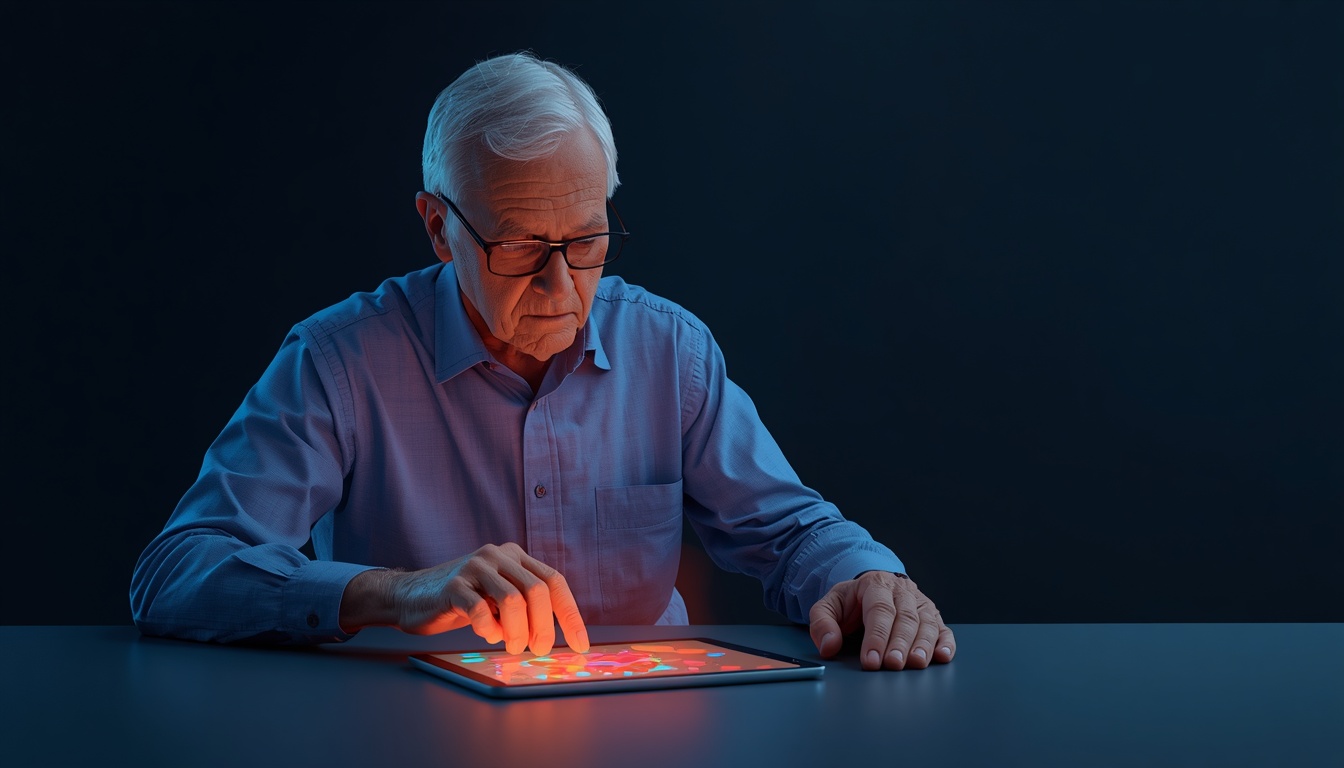
Does brain training work? If you’ve rolled your eyes at “brain training” apps before, you had good reason to. For over a decade, the industry built itself on thin evidence — better scores on the exact game you practiced, with little proof it changed anything about your actual brain or your life outside the app. A new study breaks that pattern in a genuinely interesting way: instead of asking people how they felt or how they scored, researchers looked directly at brain chemistry with a PET scan, before and after. What they found is worth taking seriously — with some important caveats.
⚡ Key Takeaways
- A randomized controlled trial (92 adults, 65+) found that 10 weeks of a specific adaptive cognitive-training app restored brain acetylcholine activity to levels typically seen in someone about 10 years younger.
- This was measured objectively with PET brain imaging — not self-reported test scores, which is what made most earlier “brain game” claims so easy to dismiss.
- The control group, who played ordinary recreational computer games for the same amount of time, showed no such change.
- The brain-training industry has a real history of overpromising — a 2014 open letter signed by over 70 scientists and a $2 million FTC settlement against a major brain-training company are part of why skepticism here is fair.
- This is one study, not a guarantee of results for everyone — but the type of adaptive, increasingly difficult training used appears to matter more than just “playing games” in general.
🧠 The Study: What Researchers Actually Measured
The trial, published in JMIR Serious Games and funded by the National Institute on Aging, followed 92 healthy adults aged 65 and older. Participants were randomly split into two groups: one trained for 30 minutes a day, five days a week, for 10 weeks using an adaptive, speed-based cognitive training app that gets progressively more difficult as the user improves. The control group spent the same amount of time playing ordinary recreational computer games with no adaptive difficulty.
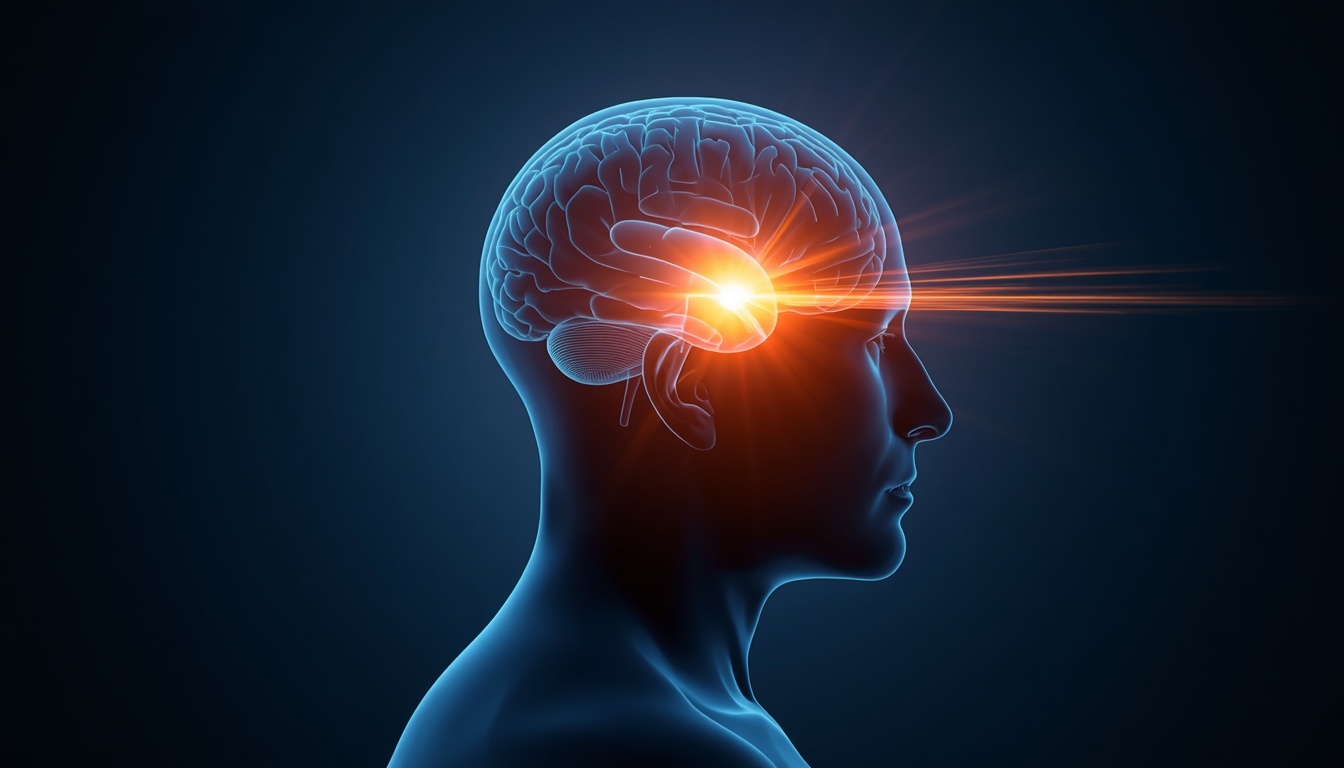
Before and after the 10 weeks, researchers used specialized PET scanning with a radioactive tracer to directly measure cholinergic activity in participants’ brains — one of only a handful of facilities in the world capable of producing that specific tracer and running this kind of scan. Only the adaptive-training group showed a measurable increase. According to lead researcher Dr. Etienne de Villers-Sidani, the training “restored cholinergic health to levels typically seen in someone 10 years younger” — and, notably, this is described as the first time any intervention, drug or non-drug, has demonstrated that specific effect in humans.
10 yrs
The estimated “youthfulness” of cholinergic brain activity restored after 10 weeks of adaptive training, measured by PET scan.
30 min
Daily training time in the study, five days a week for 10 weeks — a specific, testable protocol, not vague “brain exercise.”
🧪 Why Acetylcholine Matters So Much
Acetylcholine is one of the brain’s most important neurotransmitters for attention, learning, and memory formation. It’s also central to Alzheimer’s research specifically — the most common class of Alzheimer’s medications (cholinesterase inhibitors, like donepezil) works by preserving acetylcholine levels for longer in the brain, because cholinergic decline is one of the clearest, most consistent changes seen with cognitive aging.
That’s what makes this particular finding notable: rather than relying on people’s own reporting of how sharp they felt, or performance on the trained task itself (which is where most brain-training claims have historically fallen apart), this study measured an actual, physical change in the neurotransmitter system most directly tied to memory and aging.
⚠️ Why Skepticism About “Brain Games” Is Fair
It would be dishonest to write about this study without acknowledging why so many people (rightly) distrust brain-training claims. In 2014, more than 70 cognitive scientists and neuroscientists signed an open letter organized by the Stanford Center on Longevity and the Max Planck Institute, criticizing the brain-training industry for advertising claims that outpaced the actual science. In 2016, Lumosity — one of the best-known brain-training companies — paid a $2 million settlement to the U.S. Federal Trade Commission over deceptive advertising, specifically for claims that its games could help prevent cognitive decline and dementia without adequate evidence.

The core criticism has always been about a concept called “transfer”: does getting better at a specific game actually translate into better real-world memory, attention, or independence? For years, the strongest independent reviews found people reliably improve at the exact trained task, with much weaker and less consistent evidence that this generalizes further.
This new study doesn’t fully settle that debate — it’s one trial, and it measured a biological marker rather than, say, whether participants got better at remembering where they parked their car. But it addresses part of the historical problem directly: it isn’t relying on self-report or performance on the trained task alone, and the effect was specific to the adaptive training group, not the recreational-gaming control group. That’s a meaningfully different, and stronger, kind of evidence than what fueled the earlier controversy.
🔍 Old Brain-Training Claims vs. This Study
| Factor | Typical Past Claims | This 2025 Study |
|---|---|---|
| How improvement was measured | Self-reported feeling or in-game score | PET scan of brain chemistry (cholinergic activity) |
| Study design | Often no control group | Randomized controlled trial with an active control group |
| Type of training | Varies widely, often static difficulty | Adaptive, increasingly demanding difficulty |
| Regulatory/scientific scrutiny | FTC settlement over misleading claims (2016) | Peer-reviewed, NIH-funded, published 2025 |
✅ What This Means If You Want to Try It

A few practical takeaways based specifically on what this study tested — not on brain-training marketing in general:
The specific type of training seems to matter. The effect showed up with adaptive, difficulty-scaling exercises, not with the recreational games used as a control. Casual matching or puzzle apps aren’t necessarily doing the same thing, even if they feel similarly challenging.
Consistency over intensity. The protocol was moderate and sustainable — 30 minutes, five days a week, for 10 weeks — not an extreme regimen. That’s a realistic bar for most people to test for themselves.
It’s not a replacement for the other well-established basics. Exercise, sleep, and social connection all have their own independent, strong evidence bases for brain health — this is an addition to that list, not a substitute.
One study is a start, not a verdict. Replication in larger, more diverse samples will matter before this becomes a settled recommendation rather than a promising early result.
❓ Frequently Asked Questions
Does this mean brain-training apps in general are now proven to work?
No. This finding is specific to one adaptive, difficulty-scaling training protocol tested in a controlled trial. It doesn’t validate every app marketed as “brain training,” many of which still lack this level of evidence.
What is cholinergic activity, exactly?
It refers to activity involving acetylcholine, a neurotransmitter that plays a central role in attention, learning, and memory. Cholinergic decline is a well-documented feature of brain aging and is directly targeted by the most common Alzheimer’s medications.
Why did brain-training companies get in trouble before?
Largely for advertising claims — such as preventing dementia or reversing cognitive decline — that weren’t adequately supported by rigorous, controlled evidence at the time. That history is part of why independent, peer-reviewed, biologically measured studies like this one matter so much for rebuilding credibility in this space.
Is this a substitute for exercise or good sleep for brain health?
No — those remain independently well-supported pillars of brain health with much larger bodies of evidence behind them. This finding is best understood as one additional, promising tool, not a replacement for the fundamentals.
What makes this study worth paying attention to isn’t the marketing-friendly headline — it’s that, for once, the evidence behind a “brain training” claim is a scan, not a survey. There’s more research broken down like this elsewhere on the blog.