The Science of Sound and Brainwaves: Can Music (and Light) Actually Protect Your Brain?
MIT found that flickering light and clicking sound at a precise frequency changes what happens inside a mouse brain. Then it moved to human trials — and the story got a lot more complicated.
📖 16 min read • 🔬 20+ studies cited • 🗓 Updated August 2026
This is the article I was most excited to research for this blog, partly because of its name. “Brainsong” started as a name I liked the sound of — I didn’t expect to find an entire, genuinely contested field of neuroscience built around the idea that sound and light, pulsed at a very specific rhythm, might change what’s happening inside a brain. It’s one of the more fascinating rabbit holes I’ve gone down for this blog, and also one where I think it’s important to be extremely honest about what’s proven, what’s promising, and what’s still just a hypothesis with a good story attached.
⚡ Key Takeaways
- MIT researchers found that 40Hz (“gamma”) light and sound stimulation reduces amyloid plaque in mouse models of Alzheimer’s — a striking finding that hasn’t fully replicated in other labs.
- A small human trial of a light-and-sound device showed promising results on cognitive decline and brain volume — but the large, definitive trial is still pending as of this writing.
- Music therapy has real, moderate evidence for improving cognition and mood in dementia patients — but only at a meaningful “dose,” and it doesn’t reduce agitation the way it’s often marketed to.
- Binaural beats’ core claim — that they entrain your brainwaves — is not well supported by rigorous EEG research, despite how confidently it’s marketed.
- Chronic environmental noise, on the other hand, has real (if modest) evidence linking it to higher dementia risk — sound can hurt the brain as well as potentially help it.
🌊 A Quick Primer: What Your Brainwaves Actually Are
Before getting into the research, it helps to know what “brainwaves” actually refers to. Your neurons communicate through electrical activity, and when large groups of them fire in a coordinated, rhythmic pattern, that rhythm shows up on an EEG as a wave with a measurable frequency. Different frequency bands tend to correlate with different mental states — not perfectly or exclusively, but consistently enough that neuroscientists use them as a rough functional map: delta (0.5-4Hz) dominates during deep, dreamless sleep and restorative processes; theta (4-8Hz) shows up during drowsiness, meditation, and memory encoding; alpha (8-12Hz) is associated with relaxed, eyes-closed wakefulness; beta (12-30Hz) reflects active thinking and alert focus; and gamma (30-100+Hz, with 40Hz as a specific frequency of major research interest) is linked to sensory binding and synchronization across brain regions — this is the frequency at the center of the research below.
⚡ The MIT Discovery: 40Hz Light and Sound “Entrainment”
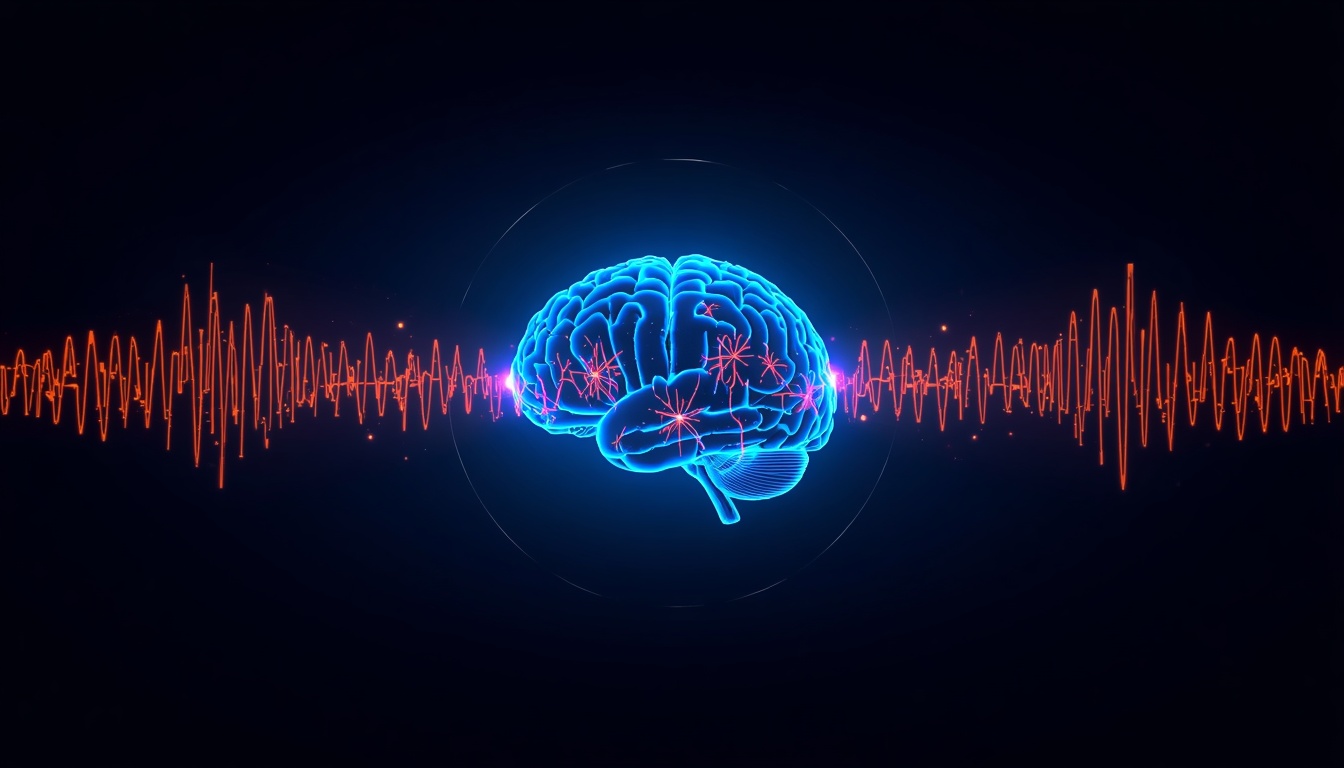
In December 2016, a research team led by Li-Huei Tsai at MIT’s Picower Institute published a study in Nature that got a lot of attention in neuroscience circles. They used both optogenetics (directly stimulating specific neurons) and simple non-invasive flickering light at exactly 40Hz — the gamma frequency — on mouse models of Alzheimer’s disease, and found it reduced levels of amyloid-beta protein in the visual cortex and hippocampus. The proposed mechanism was that the 40Hz rhythm activated microglia (the brain’s immune cells, which also came up in our brain fog article) and shifted them toward clearing amyloid rather than sitting passively.
Follow-up work from the same lab extended this beyond light: 40Hz auditory clicks produced a broader effect across cortical and hippocampal regions than light alone, and combining light and sound together appeared to work even better. A 2023 study in Frontiers in Aging Neuroscience pushed the concept further, showing that even 40Hz tactile vibration reduced tau protein and improved motor function in different mouse models — suggesting gamma entrainment isn’t specific to any one sense, but might work through a broader rhythmic mechanism.
🧪 What Happened When This Moved to Human Trials
A company called Cognito Therapeutics built a light-and-sound device based on this research and ran a Phase 2 trial called OVERTURE — randomized, sham-controlled, double-blind, 6 months long, in people with mild-to-moderate Alzheimer’s. The numbers reported (published in Frontiers in Neurology, 2024) sound dramatic on the surface: 77% less decline on a daily-function scale, 76% less decline on the MMSE cognitive test, and 69% less brain volume loss on MRI compared to the sham group, with 85% device adherence and no serious safety issues.
Here’s the caveat I think matters most, and one I don’t want to bury: this was a small trial. Only 74 people were randomized and 53 completed it, split roughly 2:1 between active treatment and sham. Those percentage reductions are real within that small sample, but a trial this size can produce numbers that look far more dramatic than what holds up at scale. The FDA granted the device “Breakthrough Device Designation” in 2021 — which signals the agency thinks it’s promising enough to fast-track review, not that it’s been proven effective or approved. The trial that would actually settle the question, called HOPE, enrolled 673 participants across 70 US sites and finished enrollment in July 2025. As of this writing, its results haven’t been published yet. Until they are, I’d treat the OVERTURE numbers as a genuinely encouraging early signal, not a proven treatment.
🥊 The Scientific Pushback
I think this section is what makes the topic worth covering seriously rather than just repeating the exciting headline. In 2023, a team led by György Buzsáki at NYU — a highly respected lab in this exact area of neuroscience — tried to replicate the original 40Hz light-flicker effect in two Alzheimer’s mouse models and published in Nature Neuroscience that they could not reliably reduce amyloid load with the technique. That’s a serious, credible failure to replicate, not a minor quibble. The original researchers pushed back, in turn, pointing to methodological differences (mixed ages, sexes, and mouse strains in the replication attempt) as a possible explanation for the discrepancy.
There’s also been outside statistical scrutiny of some of this research group’s related work — including questions raised on post-publication review platforms about whether certain reported statistics were even possible given the sample sizes used. And a 2024 review in Molecular Neurodegeneration summed up where the field actually stands: the microglial response to gamma stimulation is inconsistent across different disease models, the underlying mechanism “remains to be determined,” and the effects are, in the review’s own words, “somewhat controversial.” None of this means the idea is wrong. It means it’s genuinely unsettled science — a compelling mechanism from one influential lab, a serious failed replication from another, and human data that’s still preliminary. That’s worth knowing before anyone spends money on a consumer gamma-light device marketed as a proven Alzheimer’s treatment.
🎶 Music, Memory, and Aging Brains
Separate from the gamma-entrainment research, there’s a more established, less controversial body of work on music itself. A 2025 meta-analysis in Dementia and Geriatric Cognitive Disorders pooled 24 randomized controlled trials and found music therapy meaningfully improved cognitive function and reduced depression and anxiety in dementia patients compared to controls. An important nuance from that same analysis: it found no significant effect on agitation or quality of life — which runs counter to a lot of popular marketing around music therapy for dementia. The meta-regression also found that benefits required a real minimum dose: at least 12 weeks of therapy, at least 16 sessions, and at least 8 cumulative hours. A single “relaxing playlist” session isn’t what this evidence is describing.
On the observational side, a study following roughly 11,000 Australians aged 70 and older for about three years found that people who listened to music frequently had a 39% lower rate of dementia diagnosis, and those who frequently played an instrument had a 35% lower rate, compared to those who rarely did either. I want to flag the obvious caveat clearly: this is observational data, and the researchers themselves note it — healthier, more socially engaged, more cognitively active people may simply be more likely to keep listening to or playing music in the first place, which makes it hard to separate cause from effect. A separate meta-analysis of prospective cohort studies on lifetime instrument-playing and dementia risk found a pooled 36% relative risk reduction, but based on only three qualifying studies — a small enough number that I’d treat this as a promising signal worth more research, not a settled fact.
One smaller but more tightly controlled study, published in 2023, found that structured music interventions in 132 healthy older adults were associated with increased cerebellar gray matter volume and better auditory working memory, despite the general pattern of age-related brain shrinkage — a hint that music engagement might have some directly measurable structural effect, independent of the observational confounding described above.
🎧 What About Binaural Beats?
This is the section where I most want to push back on hype, because binaural beats are marketed extremely confidently — as tools that “entrain” your brainwaves into specific, beneficial states just by playing two slightly different tones in each ear. A 2023 systematic review in PLOS ONE looked specifically at whether binaural beats actually do what they claim: entrain measurable brainwave activity. Out of 14 studies reviewed, only 5 (36%) supported the entrainment effect; 8 found no effect at all. The authors concluded this casts “serious doubts on whether the brainwave entrainment hypothesis is scientifically tenable” as currently marketed.
A separate 2022 meta-analysis in Psychological Research, looking at binaural beats’ effects on memory and attention performance (rather than EEG entrainment itself), found a moderate pooled effect size across 15 studies — but the authors themselves described the underlying findings as “conflicting,” particularly when broken down by frequency band, and called for more rigorous study designs before drawing firm conclusions. My honest read: binaural beats might produce a mild relaxation or focus effect for some people, similar to any calming audio, but the specific mechanistic claim — that they’re precisely tuning your brainwaves the way the marketing suggests — isn’t well supported by the current evidence. It’s a meaningfully weaker evidence base than the gamma-entrainment research above, even though the two get lumped together in casual conversation.
🔇 The Flip Side: When Sound Hurts the Brain
For balance, it’s worth including the other direction of this relationship: chronic environmental noise appears to be a real, if modest, risk factor for cognitive decline. A large Danish national cohort study of roughly 2 million adults, published in the BMJ in 2021, found residential road and rail noise exposure linked to elevated dementia incidence, with the risk scaling by decibel level. A more recent Danish Nurse Cohort study (2024, Alzheimer’s & Dementia), following 25,233 people over roughly 23 years with 1,409 dementia cases, found a smaller effect that became statistically non-significant once air pollution exposure was accounted for — a useful reminder that noisy environments are often also polluted environments, and it can be genuinely hard to separate the two in observational data. The overall honest summary: chronic noise exposure and dementia risk are plausibly linked, the effect sizes found so far are modest, and air pollution is a real confounding factor that some but not all studies have controlled for.
How Strong Is the Evidence, Really?
| 🟢 Stronger Evidence | 🔴 Weak / Preliminary Evidence |
|---|---|
| Music therapy improving cognition/mood in dementia (with adequate dose) | Music therapy reducing agitation (not supported by meta-analysis) |
| 40Hz gamma entrainment reducing amyloid in mouse models | 40Hz devices as a proven human Alzheimer’s treatment (pivotal trial pending) |
| Chronic loud environmental noise as a dementia risk factor | Binaural beats reliably “entraining” your brainwaves |
❓ Frequently Asked Questions
Should I buy a 40Hz light-and-sound device right now?
I’d wait for the pivotal HOPE trial results before treating this as a proven treatment. The early human data is promising but came from a small trial, and an independent lab failed to replicate the core mouse mechanism. It’s a genuinely interesting area of research, not yet a settled answer.
Is listening to music enough, or do I need to play an instrument?
Both listening and playing show positive associations in the research, though playing an instrument showed a somewhat larger effect in observational data. Since much of this evidence is correlational, the safest takeaway is that regular, sustained musical engagement in whatever form you enjoy appears to be the relevant factor, not one specific format.
Do binaural beats actually help me focus or relax?
The specific “brainwave entrainment” mechanism they’re marketed around isn’t well supported by rigorous EEG studies. Some people may find them subjectively calming, similar to other ambient audio, but that’s a much weaker claim than what’s typically advertised.
Should I be worried about noise where I live?
If you live somewhere with significant chronic traffic or environmental noise, the research suggests a modest, real association with dementia risk — though it’s often intertwined with air pollution exposure. It’s one modifiable factor worth considering, not a cause for alarm on its own.
Researching this one made me appreciate how a name I picked mostly because I liked how it sounded turned out to point toward a genuinely real, actively debated corner of neuroscience. I tried to give you the honest, unresolved version of the story rather than the exciting-headline version. If this was useful, there’s more like it elsewhere on the blog.