Your brain feels no pain — and that’s just the beginning of this fascinating discovery.
Your Brain Feels No Pain — A Surprising Discovery
When I lost my father to Alzheimer’s, something inside me changed forever. I began looking at the brain not just as an organ in the body, but as the home to every memory, every smile, every moment we shared. Without any formal medical background, I started reading, researching, and marveling at this mysterious part of who we are. And of all the discoveries I came across, one surprised me more than any other: the human brain itself cannot feel pain.
That sounds impossible, doesn’t it?
It’s hard to believe, but it’s a scientific fact confirmed for over a century: the organ that processes every pain you’ve ever felt — a cut, a bump, a throbbing headache — has no pain receptors within its own tissue. Scientists call these pain sensors nociceptors, and they simply do not exist inside brain tissue.
Think about it this way: your brain is like a highly skilled translator. It receives messages of pain from all over your body and translates them into what you experience as discomfort. But the translator itself never actually speaks the language of pain — it only relays what it hears from elsewhere.
Technically speaking, the brain can be touched or manipulated directly without causing pain. It sounds like science fiction, but it’s medical reality — and it has saved countless lives.
Then why do we get headaches?
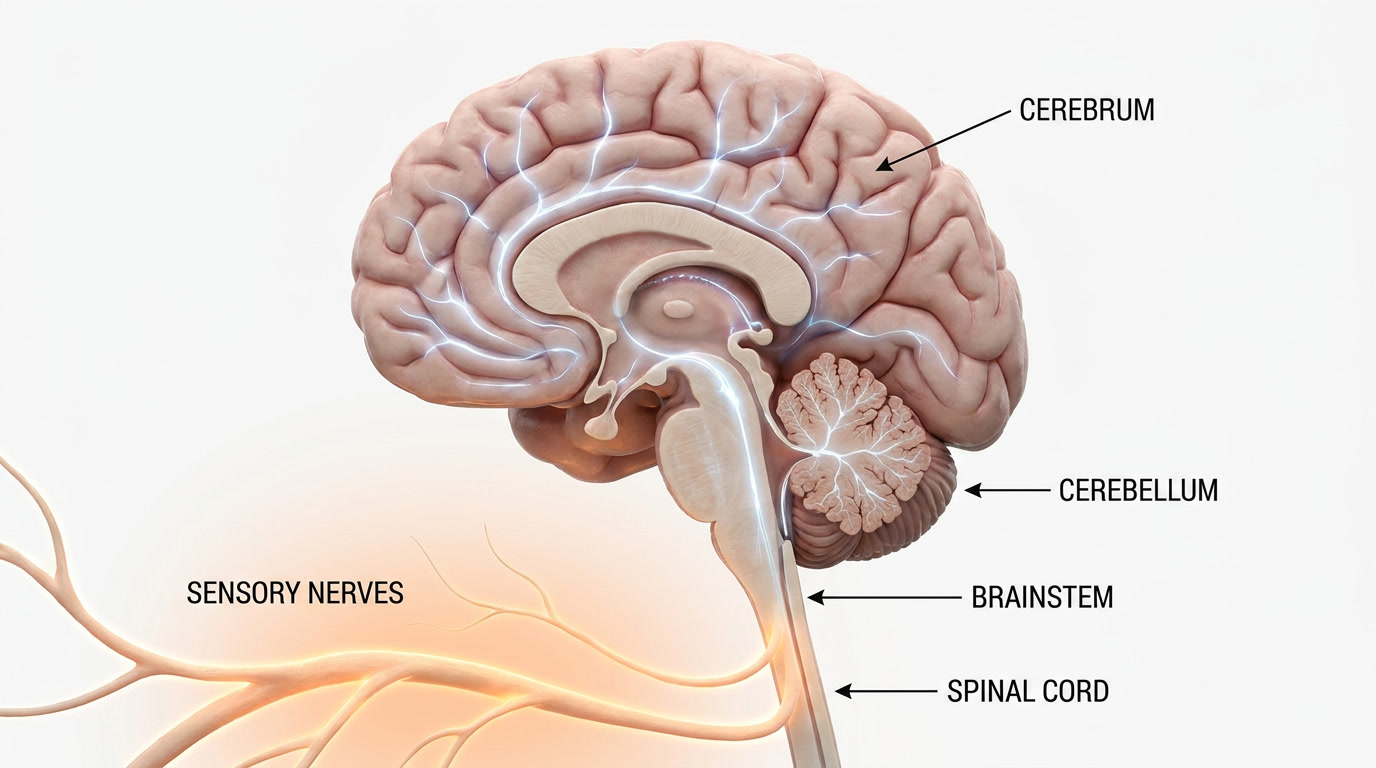
If the brain can’t feel pain, where does that pounding headache come from? The answer lies in the layers that surround the brain, not the brain itself:
- ✅ The meninges — the protective membranes covering the brain
- ✅ The blood vessels running through these layers
- ✅ The scalp and muscles of the head
These structures do have pain receptors. When you have a headache, that’s where the pain originates. Think of it like this: the brain lives inside a house. The walls, the roof, and the doors have alarm systems that detect danger — but the resident inside feels no danger directly. They only receive warnings from outside.
Understanding this difference is important. Many people worry that a headache means something is wrong with their brain itself. More often than not, it’s simply the tissues and vessels doing their job — sending a signal that something needs attention, rest, or hydration.

Operating on a brain — while the person is awake
The discovery that the brain feels no pain revolutionized medicine. Today, a procedure called awake craniotomy allows surgeons to operate on the brain while the patient is fully conscious and talking.
This isn’t as frightening as it might sound. In fact, it’s brilliant. During surgery, the medical team needs to talk with the patient to make sure they’re not touching areas that control speech, movement, or memory. While the patient speaks, answers questions, or even plays music, the surgical team works with precision. This is only possible because the brain itself cannot feel pain.
I think about the courage of these patients and wonder: how wonderfully designed is the human body, protected in such an intelligent way? It reminds me that our bodies are built with remarkable resilience — even in the places that matter most.
How this discovery helps us understand Alzheimer’s and other conditions
Learning that the brain doesn’t feel physical pain also changed how I think about conditions like Alzheimer’s disease. My father didn’t feel “pain” in his brain as his memory changed. What he experienced was different — confusion, frustration, moments of uncertainty. But the organ itself wasn’t hurting.
This distinction matters. It means that when we comfort someone living with memory loss, we’re not easing physical pain — we’re offering connection, familiarity, and peace. We’re creating a safe environment around them, much like those protective layers around the brain — keeping the outside gentle and calm, even when things feel different inside.
What this teaches us about being human
For me, this discovery goes far beyond medical curiosity. The brain interprets our pain, yet it remains calm at its core. There’s a powerful lesson there: we can be surrounded by pain and difficulties on the outside, but there’s a space deep within us that remains untouched, peaceful, and strong.
My father couldn’t remember much toward the end, but he was still there — essentially whole — inside. This discovery reminds me that we are more resilient than we realize. Our essence, who we truly are, can remain at peace even when everything around us feels difficult.
Caring for our brain means caring for who we are: getting enough sleep, eating well, staying physically active, keeping socially connected, and most of all — keeping curiosity alive by learning something new, every single day. A healthy brain isn’t one that never experiences difficulty — it’s one that continues to grow, adapt, and interpret the world with wonder.
In Short
- ✅ The brain has no nociceptors — no pain receptors — in its own tissue
- ✅ Headache pain comes from the meninges, vessels, and scalp, not the brain itself
- ✅ Brain surgery can be done with the patient awake and talking
- ✅ The brain interprets pain — but it does not feel it
- ✅ Conditions like Alzheimer’s affect function, not physical pain — compassion is our most powerful tool
If you or someone you love is navigating brain health challenges, know that science is advancing every day. Sometimes our greatest strength comes not from knowing all the answers, but from understanding ourselves and each other better — not with fear, but with wonder and care.
Thank you for joining me on this journey of discovery. 💛